
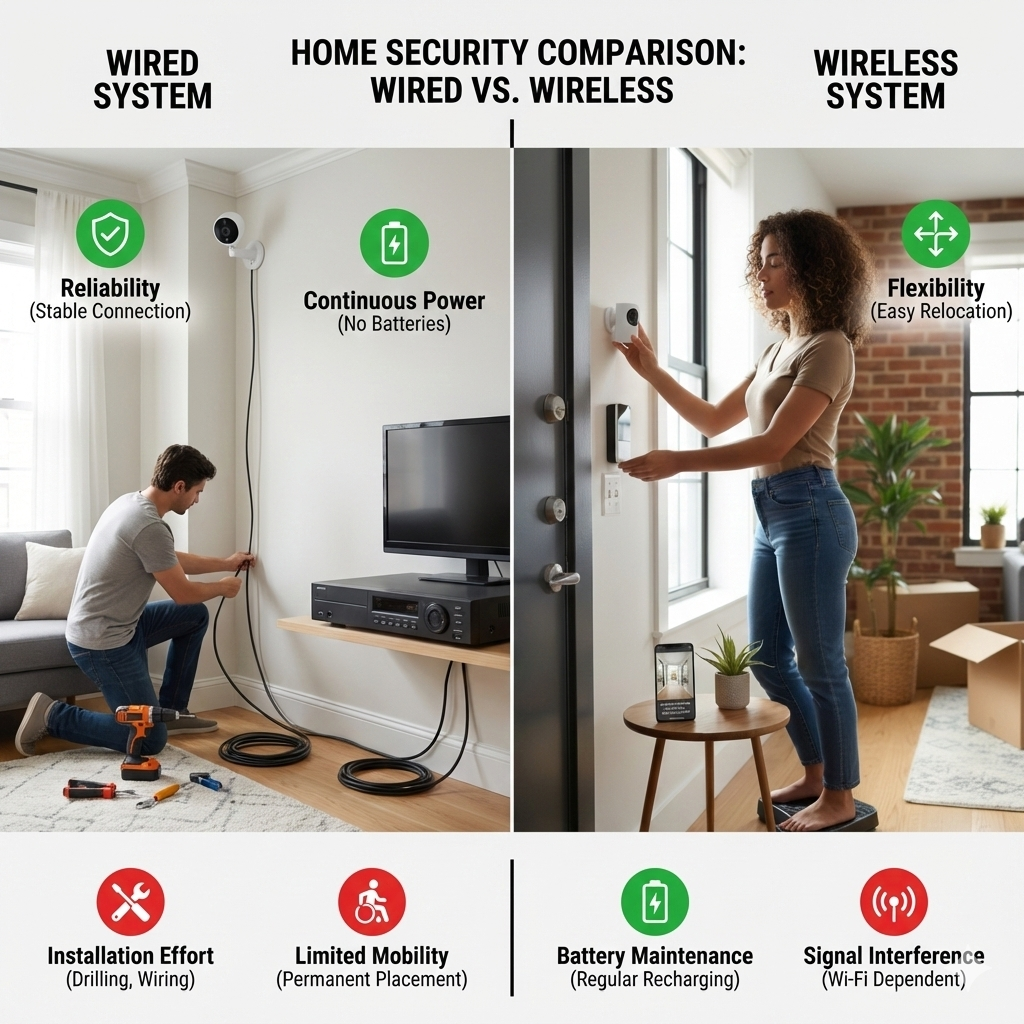
Wired vs Wireless Security Camera System: Pros and Cons Compared
Choosing the right home security system is no longer a luxury—it’s a necessity. With rising concerns about property safety, package theft, and privacy, many homeowners and renters find themselves asking a critical question: Wired vs Wireless Security Camera System—Which is better for home security?
Both options have their strengths and limitations. This guide breaks down everything you need to know—from installation costs and reliability to flexibility and long-term value—so you can make a confident decision.
Understanding Security Camera Systems
Before diving into comparisons, it’s important to understand what separates wired and wireless systems at a fundamental level.
What Is a Wired Security Camera System?
A wired security camera system connects cameras to a recorder (DVR or NVR) and power source using physical cables. These systems are commonly used in permanent installations such as houses, offices, and warehouses.
Key characteristics:
- Physical cabling for power and data
- Often connected to a central recording unit
- Typically supports 24/7 continuous recording
What Is a Wireless Security Camera System?
A wireless security camera system uses Wi-Fi to transmit video footage and often relies on batteries or nearby power outlets.
Key characteristics:
- Wireless data transmission
- Faster installation
- App-based monitoring and cloud storage options
Wired vs Wireless Security Camera for Home Security — Core Differences
| Feature | Wired Security Cameras | Wireless Security Cameras |
| Installation | Complex, professional help recommended | Easy, DIY-friendly |
| Reliability | Very stable | Depends on Wi-Fi |
| Video Quality | Consistent, high bitrate | Varies with network |
| Flexibility | Low | High |
| Maintenance | Minimal | Battery replacement |
| Cost | Higher upfront | Lower upfront |
Pros and Cons of Wired Security Camera Systems
Advantages of Wired Security Cameras
1. Reliable Performance
Wired systems are not affected by Wi-Fi congestion or signal interference, making them extremely dependable.
2. Continuous Recording
Ideal for users who need 24/7 monitoring without missing events.
3. Higher Security
Harder to hack since they are not dependent on wireless networks.
4. No Battery Issues
Once installed, they run continuously without battery replacement.
Disadvantages of Wired Security Cameras
1. Higher Installation Cost
When comparing wired security camera installation cost vs wireless, wired systems usually require professional installation.
2. Less Flexible
Relocating cameras after installation is difficult.
3. Visible Wiring
Improper installation may impact aesthetics.
Pros and Cons of Wireless Security Camera Systems
Advantages of Wireless Security Cameras
1. Easy Installation
Perfect for renters and DIY users—no drilling required.
2. Flexible Placement
Easily reposition cameras when moving or remodeling.
3. Smart Home Compatibility
Works seamlessly with mobile apps, voice assistants, and automation platforms.
4. Lower Initial Cost
Wireless systems generally cost less upfront than wired solutions.
Internal Link Suggestion:
A flexible example is the PTZ WiFi Camera 1080P, offering pan-tilt control and mobile monitoring.
Disadvantages of Wireless Security Cameras
1. Wi-Fi Dependence
Network instability may affect video streaming.
2. Battery Maintenance
Some models require frequent recharging.
3. Signal Interference
Dense environments can impact performance.
Wired vs Wireless Security Camera Installation Cost vs Wireless
When budgeting for home security, cost is often a deciding factor.
Wired System Costs
- Hardware: Moderate to high
- Installation: Professional fees
- Long-term: Lower maintenance costs
Wireless System Costs
- Hardware: Affordable
- Installation: DIY (free)
- Long-term: Cloud subscription + batteries
Verdict:
Wireless systems win on affordability and ease, while wired systems offer long-term stability.
Which System Is Right for You?
Choose a Wired System If:
- You own your home
- Need 24/7 continuous recording
- Want maximum reliability
- Prefer minimal ongoing maintenance
Choose a Wireless System If:
- You rent your home
- Move frequently
- Want smart features and mobile alerts
- Prefer quick installation
Internal Link Suggestion:
For renters, the Smart Bulb Security Camera is an innovative wireless option that installs like a regular light bulb.
Real-World Scenarios
Scenario 1: Apartment Renter
Wireless cameras offer portability and landlord-friendly installation.
Scenario 2: Suburban Homeowner
A wired system ensures uninterrupted monitoring and better perimeter security.
Scenario 3: Smart Home Enthusiast
Wireless systems integrate better with voice assistants and smart automation.
External Expert Insights
According to consumer safety experts and industry research:
- The Federal Trade Commission (FTC) emphasizes secure network practices for wireless cameras.
- Consumer Reports notes wired systems are more reliable for long-term surveillance.
- CNET highlights wireless systems as ideal for smart home ecosystems.
External Link Suggestions:
- Consumer Reports – Home Security Camera Buying Guide
- CNET – Wired vs Wireless Security Cameras
- FTC – Protecting Smart Home Devices
Final Verdict — Wired vs Wireless Security Camera System
There is no universal “best” option. The right choice depends on your living situation, budget, and security priorities.
- Wired systems excel in reliability and continuous protection
- Wireless systems shine in flexibility, affordability, and smart integration
By understanding the pros and cons, you can confidently select a system that truly protects your home and peace of mind.
Frequently Asked Questions (FAQ)
Q: Are wireless security cameras safe from hacking?
A: Yes, if you use strong passwords, encrypted networks, and updated firmware.
Q: Do wired cameras still work during internet outages?
A: Yes, they continue recording locally.
Q: Which is better for renters?
A: Wireless security camera systems.
AI Home Security – Intelligent Identification and Early Warning